
Your Guide to Building at Sugarloaf
Hello, Sugarloafers (or those soon to be) and welcome to my all inclusive guide to building at Sugarloaf. This blog is the first part of a series that’ll help you learn everything you need to know before you get started.
Consider this first post an overview of the whole process, and expect deeper breakdowns of some of the finer points over the next few months. We’ll be covering everything from choosing a lot to design considerations, zoning and building codes you need to know about, permitting, hiring a contractor, and more.
This guide is intended for anyone building a ground-up house at Sugarloaf or adding onto an existing house. There will be another guide exclusive to renovating condos coming soon!
Let’s dive in.
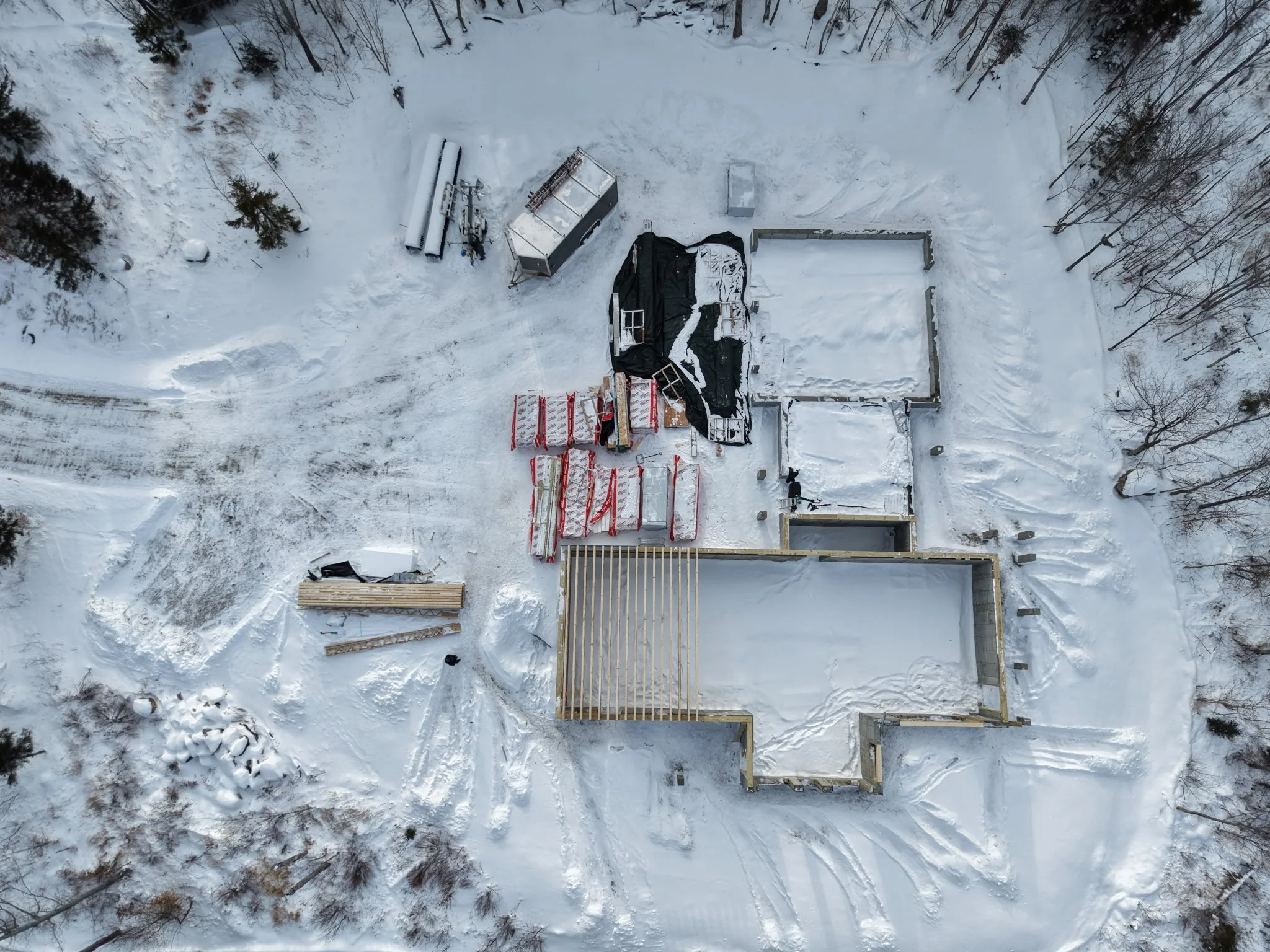
Photo Credit: Campbell & Co Landscaping + Construction
Picking a Sugarloaf Lot
You may not realize it driving up the access road, but Sugarloaf has a vast collection of neighborhoods. Each neighborhood is a little different, so here are some things to consider when deciding where to put down roots.
(If you already have a lot, you may want to skip down to the next section: Designing a Home at Sugarloaf.)
Neighborhoods
The following list is an incomplete overview of the different “on-mountain” neighborhoods with buildable lots. We left condo and townhouse-exclusive neighborhoods off the list, so check out this post from Mountainside Real Estate for a deep dive on Sugarloaf neighborhoods.
Mountainside - Closest to the base area with walkable lift and shuttle access
Spruce Knoll, Twinbrook, and Sugarloaf Village I and II - Off the Access road, farther down the mountain with shuttle and XC ski/mountain biking trail access
Village on the Green - On the west side of the Access road, near the golf course, with shuttle access
West Mountain - Existing and new developments on West Mountain with lift and shuttle access
There are also some really excellent off-mountain neighborhoods to explore:
Redington
Bigelow Station
Valley Crossing
Zoning
Fun fact about some Sugarloaf home sites: they predate local zoning codes. What this means for you is that there might be some tricky rules to navigate for any potential building projects.
Believe it or not, we also run into Shoreland zoning rules at Sugarloaf. Yes, you read that right. Shoreland zoning applies to many Sugarloaf properties because of all the babbling brooks running down the mountain.
Here are the most common zoning requirements we work around at Sugarloaf:
Property lines and setbacks
Height restrictions
Footprint allowances
Design/style restrictions
Be sure to do some research ahead of time to make sure you can build the Sugarloaf house of your dreams. Carrabassett Valley’s Code Enforcement Officer is very friendly and helpful. You can find his contact information and all the town’s documents regarding zoning on the town website.
Associations & Building Codes
Don’t stop your code research at the town level. There’s also the Sugarloaf Design Review Board (DRB) and HOA guidelines that must be followed. There is little online information about these entities. Ask your realtor for more information, including email addresses and phone numbers of your HOA presidents and/or the current contact for the Sugarloaf DRB.
In addition to zoning and location specific rules, there are also building codes that should be adhered to, as a matter of safety, function, and comfort. Building codes include things like the minimum ceiling height over a set of stairs or ensuring that there are smoke alarms in every room and CO2 detectors on every floor. As they say, building codes are written in blood, they exist for a reason.
There IS some good news: permits in Carrabassett Valley are a breeze compared to permitting in a city like Portland (or literally any other city). Town permit applications are relatively minimal and our one code enforcer is a reasonable person. It’s the permitting wild west(ern Maine). Just another reason to build your Sugarloaf dream house!
View
Not every lot at Sugarloaf has a great view, and not every lot has a view of Sugarloaf.
When choosing a location, take some time to consider whether this is important to you or not. For many lots, you may not be able to see Sugarloaf, but you CAN see the Bigelows, Crocker, Burnt, or Redington.
Another thing to consider is the sun. Sugarloaf is north-facing, which means it casts a pretty big shadow. Pay special attention to sun angles and directions when choosing a lot and designing your home. If you can’t get a view, maybe you can get some great southern exposure, lowering your future heating bills and gaining some dreamy natural light.
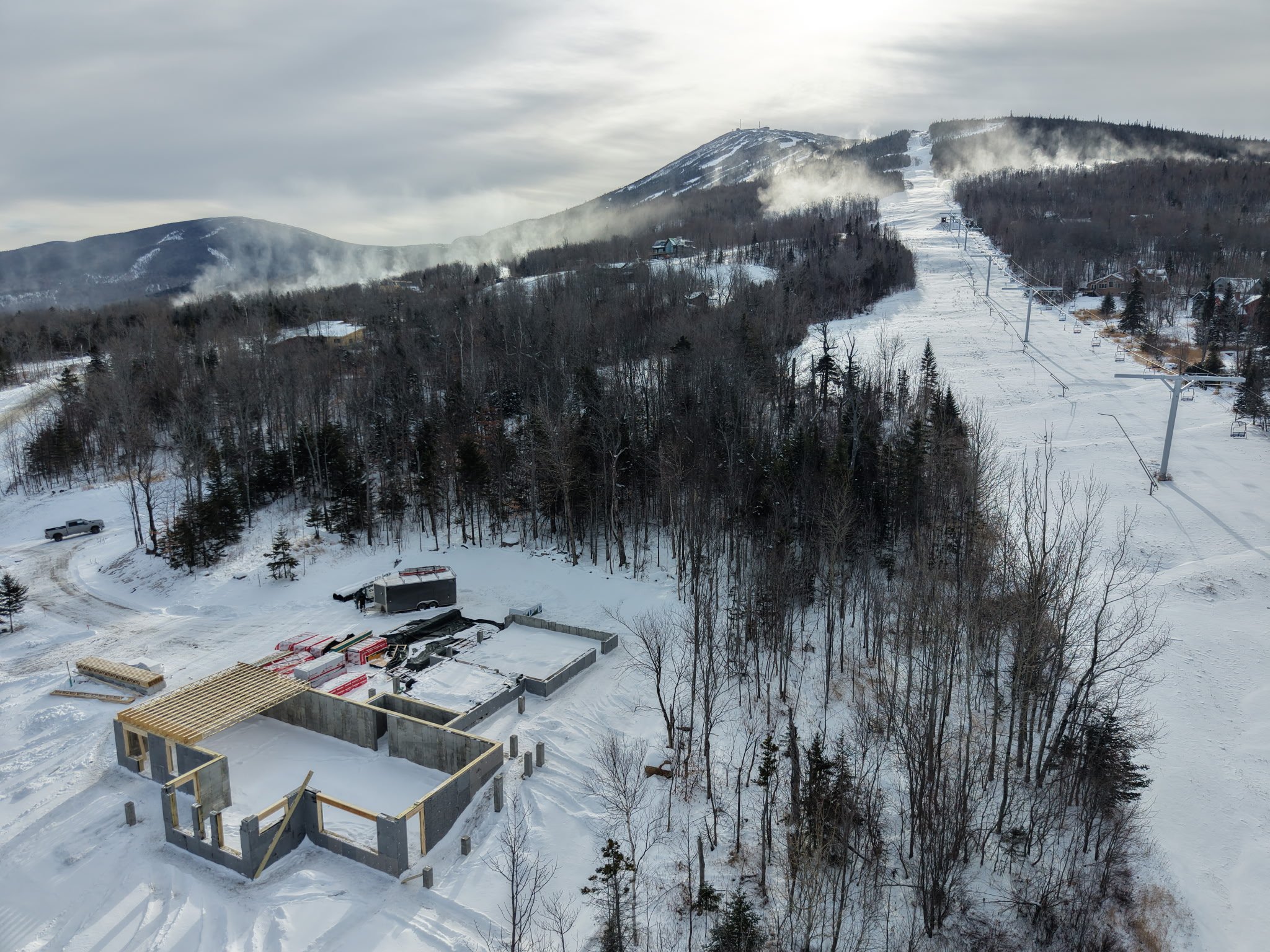
Photo Credit: Campbell & Co Landscaping + Construction
Bus Routes, Lift Access, and Parking
Parking at Sugarloaf can be a bit of a madhouse. Anyone who has been up on a busy Saturday has seen cars parked the entire length of the Access Road, and people slogging along with all their stuff to the nearest bus pick-up spot.
Spend a little time looking into your transportation options before making any decisions about where you want to be. Lift and trail access are great, but lifts are not always available. Shuttles run reliably in the winter, but the schedules can change or be limited, so make sure you’re on a route that works for your needs.
Something else to consider is a garage. Not all locations have garages or allow you to build them. Make sure a garage is on your list if you like sliding on the snow but not scraping it off your car every time you want to go somewhere.
Designing a Home at Sugarloaf
Once you decide the where, you can start working on the details of the what.
Land Survey
Circling back to the section about about code research, a great place to start is with a land survey. A land survey isn’t required, but it helps you determine where your property lines and setbacks are and where there may be things on your property that you can’t move or build near (sheds, ledge outcroppings, bodies of water, etc).
Think of a land survey as a due diligence piece of the planning stage.
Mountainside Home Design Tips
Designing a home at Sugarloaf is pretty different from designing a home on the coast. Snow, topography, humidity, wildly varying temperatures, salt on the roads and not in the air, the list goes on.
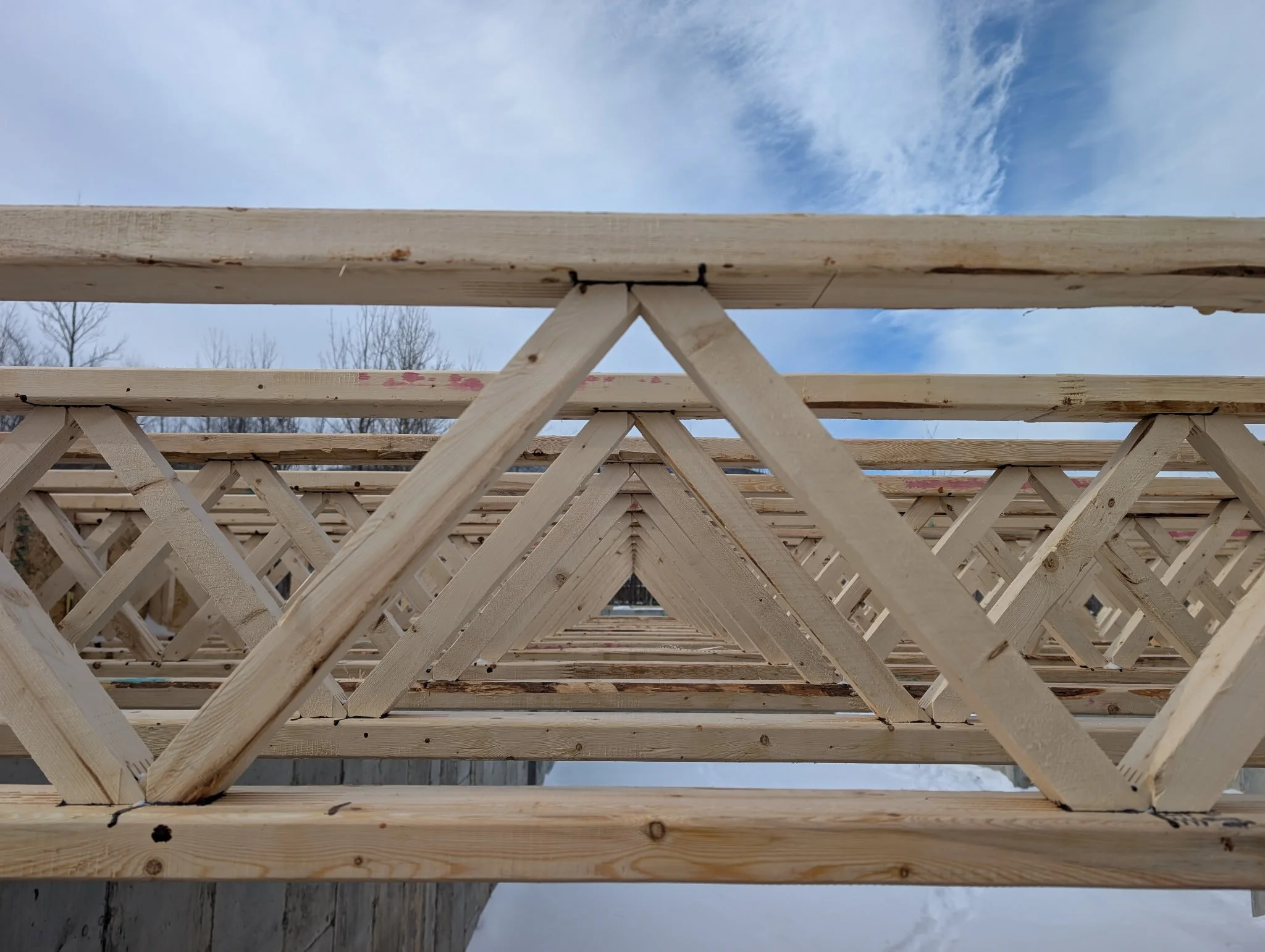
Photo Credit: Campbell & Co Landscaping + Construction
Here are my top design tips for homes at Sugarloaf based on over a decade of experience designing homes for this specific climate.
Rooflines and Snow - Poor rooflines are perhaps the biggest mistake I see on mountain. Sugarloaf gets a lot of snow (hopefully!) and that means a high chance of water intrusion, at the roof and on the ground. Houses around here should minimize roof valleys and penetrations. Basically, keep it simple and don’t poke unnecessary holes in the roof. Then plan for where the snow will land. How fast will it slide off the roof (metal or asphalt shingle roofing)? Is it going to get jammed anywhere? Does it have space to pile up on the ground? That leads to the next tip…
Siting - There are innumerable considerations with your siting. For example, where will snow melt drain in the spring? Are we on a hill and will that affect the foundation and drainage? Can we use any southern sun for free heat? Are there any views to emphasize?
Foundation - Mainers love basements but they’re not always the best option up here. The only time I recommend a basement is when we’re on a hill and the basement can be very functional. It’s basically the first floor of the house with concrete walls. Otherwise I prefer a slab with frost walls. Sometimes, but rarely, a crawl space makes sense.
Utilities - Are we on town water or do we need a well? On town sewer or do we need septic? Is there an electrical supply nearby or will we need to run a hundred of feet of electricity? These can be very expensive questions.
Siding - Siding in our climate takes a beating. You should consider how much time you want to spend on maintenance, especially if this isn’t your primary residence. Real wood siding is really beautiful but it has needs. Most houses in this area choose a durable, quality composite siding like LP Smartside. But this specification should be considered in the greater question of wall assemblies, which leads to the next tip…
Insulation, Air Sealing, and Ventilation - Winters are cold and summers are hot (and getting hotter). Code minimums are pretty close to what I would recommend for insulation (IECC 2021) but if you layer that much insulation with the wrong vapor barrier or mechanical ventilation, moisture gets trapped. BAD. Make sure you design an enclosure assembly and ventilation system that work together.
Heat and AC - There are lots of ways to get heat. From the sun (passive solar!) to boiler-fueled radiant floors to electric heat pumps. Consider your environmental impact (gas vs electric) and your average HVAC demands. Do you want a woodstove for power outages or would you prefer a whole house generator? Do you want AC? Summers are getting verrrrrry hot! This is a complex domino of questions that you should lean on a professional to help untangle.
Windows and Doors - Minimize north-facing windows. Maximize south-facing windows but make sure there’s an overhang or well placed trees that will shade them in the summer. East and west windows should be considered for solar gains at certain times of day. This all sounds simple but Sugarloaf is a north-facing mountain. It can be very hard to maximize views and not waste heat energy out the windows. Triple pane windows are a great way to mitigate that heat loss while maximizing access to views and natural light.
Colors - You can drive around the mountain and see the most popular house colors by decade. Sugarloafers tend to build trendy. I encourage homeowners to think outside the box. What colors do you like on houses surrounded by white snow? How about lush green trees? I also love varied patterns and color changes. If done properly, they can make a house really unique. While there are plenty of options, you will run into some restrictions through the Sugarloaf DRB and likely your HOA, too, so find out what is allowed before falling in love with a specific color palette.
Garages - Are you ok with shoveling your car out after a snowstorm? Do you have other gear you want to store inside (lawnmower, snowmobile, bikes)? Do you have space on your lot, within the setbacks? Does your HOA allow detached garages?
Mudrooms - You want a Mudroom. As big as you can afford. Trust me on this. Even better if you can make it an airlock.
Hot Tub or Sauna - I love heat after a long day of skiing or snowboarding. Especially if that heat comes with a view. If you want a hot tub or sauna, make sure to plan a power and water source. Also, hot tubs are heavy and should be properly supported whether on the ground or up on a deck.
Decks - I believe that a deck doesn’t get much use unless it’s covered. And in our neck of the woods, a screened porch is a must-have (IMHO). If possible, plan for a north-facing screened porch and a south-facing covered porch. If you’re planning uncovered decks or patios, consider snow fall and sun angles.
Hiring a Sugarloaf Architect
Bear with me for a moment of shameless self promotion.
Architects are heavily involved in the design and planning phase of your project. Then many of them hand you and your project off to a contractor and disappear.
I don’t do that. Why? Because you might find that you need to make changes to the design after construction starts. Because your contractor might have questions about the design or ideas for how to execute it while staying in budget but needs a second opinion. Because many of my clients don’t live here and rely on me for site visits and updates. Because the start of construction is not the end of this project we’ve been designing for months.
When you hire Meldrum Design, you are hiring a partner for your project who is invested in its success from the first consultation meeting to the moment you’re walking into your new home.
Here are the first steps we take when you hire us:
Site Meeting - We get together in-person, at the site, to discuss the details of your project.
As-Built Measurements - If there’s an existing structure, we take measurements to create a digital twin that we can use as the basis of your new design. We use a matterport machine and the digital twin it creates looks like Google street view inside your house. It’s pretty cool and highly useful.
Code Research/Checking with the town’s CEO - As mentioned above, we do extensive building and zoning code research to make sure the proposed design is possible and we check in with the town’s Code Enforcement Officer as necessary.
Association Design Rules Research - We’ll also dig into any association design rules and help you navigate their review process when the time comes.
Architectural Documents and Plans
Once you have secured a site, hired an architect, and figured out what you want to build, we get to the fun part: creating the plans for your project! This phase is where you see your ideas come to life.
You can read a deeper dive on architectural documents and plans here, so consider this a brief overview.
Be prepared to provide a lot of input early in this process. As the drawings become more technical, my questions are generally aimed more at the contractor so we end up with plans they are happy using and understand well.
You should also be prepared for this process to take anywhere from a few weeks to a few months, or maybe even years. Yes, years. So if you’re looking to build sooner than later, please get on my waitlist now to get started.
Schematic Design (SD)
In Schematic Design, expect a fair amount of back and forth. Depending on the project, this phase may include a Schematic Site Plan, Demolition Plan, Proposed Floor Plans, and Building Section.
These plans are light on notation and dimensions so we can work through revisions and ideas relatively quickly. We’ll also do a 3D massing model so you can get a better feel for the size and shape of the house.
At this stage, we like to consult with a contractor to get their input and make sure we’re in the ballpark of your construction budget. If you don’t already have a contractor lined up, I can help with the search and interviewing.
Design Documents (DDs)
Design Documents get much more detailed because we’ll be using these for pricing. You can expect this package to include everything from the Schematic Design set plus Elevations, 3D views, Roof Plan, Spec Sheet and any other drawings from consultants we’ve tapped in at this stage.
We’ll also talk in detail about your enclosure (wall, roof, & floor assemblies), your mechanical system (HVAC), and your other utilities. We will have touched on it in SD but now it’s time to make decisions.
Pricing
Possibly the most important step, pricing before construction avoids wasted time, energy, and heartache. The contractor does most of the legwork in pricing, but I’m available to help research, brainstorm, and answer questions.
For accurate pricing you’ll need detailed architectural drawings. It also helps to have interior specs including flooring, countertops, appliances, etc. Not essential but helpful. My goal is always the most efficient deliverables to keep us all on the same page. Once I know we’re within budget, I’ll add more detail for construction (see CDs below).
Construction Documents (CDs)
Depending on permitting needs and how familiar I am with your builder, we start in on CDs. Basically I add a crap load of detail (technical term) to these drawings. Depending on the project, this may include a Lighting Plan, Assembly Details, Exterior Material Specifications, other info required for clarity with the contractor, and the many little notes required by code.
Permits and Financing
Based on your permitting needs, I’ll put together a permit application package and your contractor will usually handle most of the permit processing. Check out more specifics on permitting, noted above.
I always ask in the beginning, how are you financing this project? Cash is fun! But if you can’t pay all cash, you’re probably looking at a construction loan. The construction loan will pay for the build and then you’ll likely roll it into a mortgage. The interest cost of a construction loan can be surprising, so ask your bank for an estimate and then plan for that cost in the overall project budget.
Banks also require a lot of paperwork before they issue a construction loan. They need to appraise the design and then will regulate payments based on construction progress. The loan application usually requires complete architectural drawings, a detailed construction estimate, approximate construction timeline, and personal finance documents.
Stay tuned for a guide where I talk about overall project budgets and how to build one. Understanding and creating your budget can be the thing that makes or breaks your project, so it’s important to get it right and start planning for it early on.
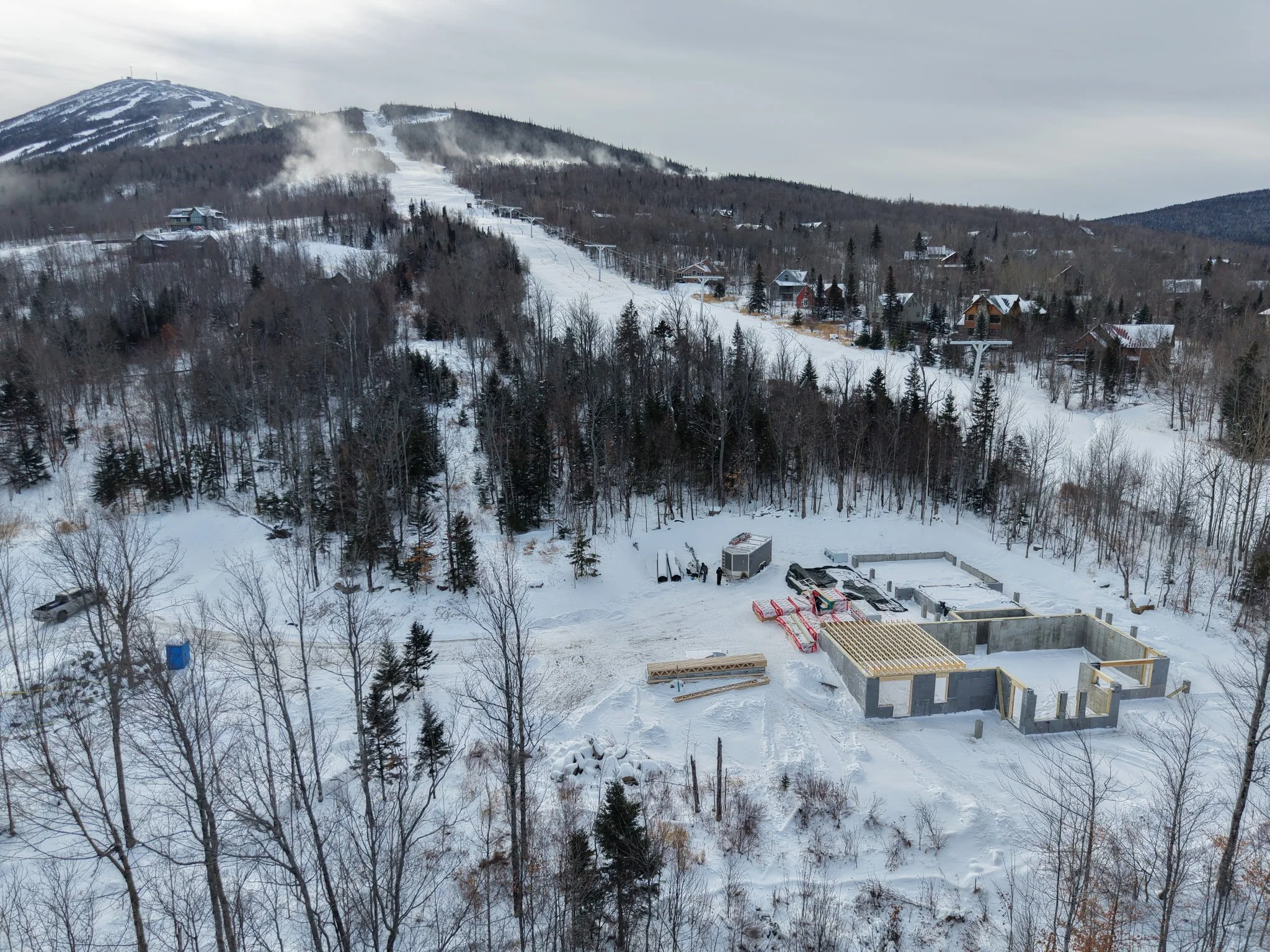
Photo Credit: Campbell & Co Landscaping + Construction
Hiring a Contractor
Some of my clients find me through a contractor they have already hired. If that’s you, hello!
For those who do not have a contractor yet, the sooner you can get a contractor signed on, the better. Check out this blog post for an in-depth guide about where contractors fit into the design process.
Your contractor is an integral part of your project team, so finding one you like and that you like working with should be near the top of your priority list.
Here are some green flags you should be looking for when considering a contractor for your project:
You have good rapport and they react well to your project ideas. If they don’t love your ideas then they suggest alternatives.
I always prefer local contractors but there are some builders from away who are worth it.
They are relatively communicative. Getting answers from a contractor can be an art in itself, but ideally they’re open to weekly update calls, minimum.
Displays good knowledge of most of the design tips above.
Plans to provide a detailed construction estimate before the start of construction.
Doesn’t answer “spray foam” to every question about insulation.
Built your friend’s house and they were happy with the process.
Has good working relationships with all necessary subcontractors. This one is hard to verify but it’s worth some calls.
While some contractors will act as a project manager, not all of them love that part of the job. Luckily for you, we can help with that. Myself along with the Meldrum Design team can manage your project to keep track of deadlines, encourage teamwork, and keep you updated from start to finish.
Plus, hiring us to manage your project frees up your contractor to focus on building your house rather than spending time keeping track of emails and explaining the basics of construction.
Construction at Sugarloaf
Alright! Your documents are beautifully detailed and ready to go. Your contractor is on-board. You have permits, you have financing. It’s time to build!
Here’s what you should expect during construction:
Plan to visit regularly. Often you’ll see something you want to change on the fly. This house is customized for you, so take advantage! Also, it’s really exciting to see the project progress.
Stay ahead of contractor payments. Ask them for approximate timing or when the next bill might hit. If possible, move money to be prepared.
Construction timelines are just an estimation. We can’t predict weather, illness, family emergencies, supply chain issues. Don’t get attached to a certain completion date, hope for the best and plan for a long haul. Trust me, you’ll be much happier homeowner.
This will take more of your time than you expect. (I could say that about the whole project from beginning of design!) The contractor and I will guide you through hundreds of decisions (seriously). Building your own house takes time and mental energy, don’t underestimate it. Luckily you know someone who can help with project management…
Build at Sugarloaf with Meldrum Design
Building at Sugarloaf is a process for sure, but it’s rewarding and well worth the investment. The mountain community is growing, and building here let’s you and your family be a part of the Sugarloaf legacy for generations to come.
It is my passion to help homeowners realize their dreams. I want to create a space where you feel stimulated and relaxed. Inspired and soothed.
If you’re ready to get your creative juices flowing, check out my gallery, drive around your favorite Sugarloaf neighborhood, and peruse Houzz for inspiration. And let me know if you want to get on my waitlist! I’m good at this stuff. :)